
Scrolling, Comparing, Hurting: How Social Media Can Fuel Eating Disorders
There are moments when I catch myself scrolling without even realizing how long I’ve been doing it. A few minutes between meetings. Sitting in the carpool line. Late at night when the house is finally quiet.
At first, it feels harmless, even comforting. Social media helps me stay connected to friends and family during a busy season of life filled with work, motherhood, marriage, and advocacy. It lets me celebrate milestones, laugh at parenting moments, and feel less alone in a very full life.
But sometimes, without warning, scrolling turns into something else. It turns into comparing. And comparing starts to hurt.

The Voices That Never Fully Leave
Long before social media algorithms existed, I struggled deeply with body image and an eating disorder. I competed in pageants, environments where appearance wasn’t just noticed; it was evaluated, scored, and publicly judged.
Even though it has been more than 15 years since I last stepped onto a stage, those voices don’t completely disappear. Recovery teaches you how to respond differently to them, but occasionally they still get loud.
They whisper things like:
- You should look better.
- You’ve let yourself go.
- Everyone else has figured this out.
Recovery doesn’t mean never hearing those thoughts again. It means learning not to believe them. Social media, however, has a way of amplifying those old narratives.
The Comparison Machine in Our Pockets
Today’s social media platforms are not neutral spaces. They are designed to show us content that keeps our attention, and often, that content reflects highly curated, filtered, and unrealistic versions of life.
Some days my feed fills with images of the “perfect” life:
- The effortlessly stylish mom with flawless hair at school drop-off
- The perfectly organized home
- The smiling family eating picture-perfect meals
- The “trad wife” aesthetic promising peace through perfection
- Bodies that appear untouched by stress, aging, pregnancy, or real life
Intellectually, I know these images are curated. I know lighting, filters, editing, and selective storytelling are involved. But eating disorders don’t live in logic, they live in emotion and non-logical beliefs. And comparison is emotional.
For someone in recovery, or someone vulnerable to disordered eating, repeated exposure to unrealistic ideals can quietly reopen old wounds.
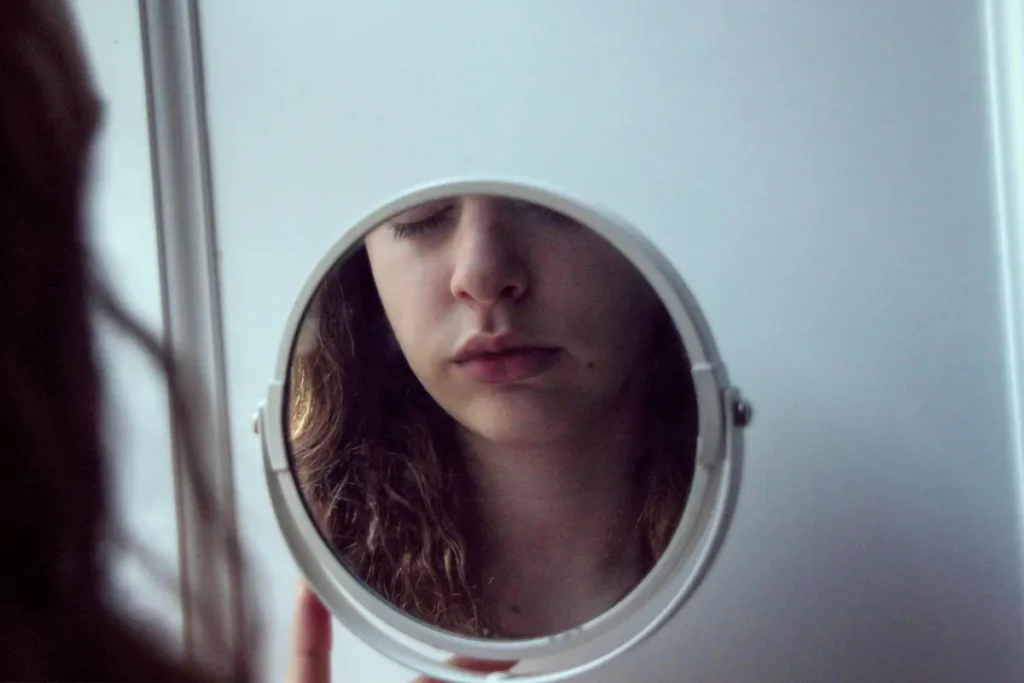
Why Social Media Can Be Especially Harmful in Eating Disorder Recovery
Social media can fuel eating disorders in several subtle but powerful ways:
1. Constant Comparison
We are no longer comparing ourselves to a small social circle. We are comparing ourselves to thousands of carefully edited lives every day.
The brain begins to treat these images as the norm rather than the exception.
2. Algorithm Reinforcement
If you pause on one fitness post, weight-loss video, or appearance-focused image, the algorithm often sends more. Suddenly scrolling your feed becomes saturated with messages about productivity, beauty, thinness, or perfection, even if you never intentionally searched for them.
It can feel like the world is telling you who you “should” be.
3. Identity Pressure
Many people today feel pressure to excel simultaneously as:
- the perfect parent,
- the successful professional,
- the healthy eater,
- the stylish partner,
- the endlessly patient human.
No one can live up to all those roles perfectly, yet social media makes it appear achievable.
A Different Kind of Worth
Today, my life looks very different from my pageant years. I am a wife, a mother, an advocate, and a woman still practicing recovery every day.
Some mornings I leave the house without styled hair. Some days I feel behind. Some days the old voices try to return.
But recovery has given me something stronger than perfection: perspective. My worth was never meant to be measured by appearance, productivity, or comparison.
And neither is yours.
If social media leaves you feeling smaller, remember these truths:
- You are seeing highlights, not humanity.
- You are comparing your real life to someone else’s performance.
- And your healing matters more than any algorithm.
Scrolling doesn’t have to end in hurting. With awareness, support, and compassion, it can become just one small part of a much fuller, more meaningful life.

Center for Change is a place of hope and healing that is committed to helping people break free and fully recover from their eating disorders. The Center uses a multi-disciplinary approach with specialized and intensive treatment for eating disorders and co-occurring issues, including a specialty program for co-occurring diabetes (ED-DMT1). We offer the most comprehensive medical, dietary, and psychotherapy programs available, with a full continuum of care – from inpatient and residential treatment, to day & evening programs and outpatient services. We focus on healing the whole person – mind, body, spirit, and relationships – to free those suffering from the pain and loneliness that have overcome their lives. Insurance is accepted and multiple funding options are available. Center for Change is accredited by The Joint Commission, AdvancED, and is TRICARE® certified. For more information contact the Center at 888-224-8250 or visit www.centerforchange.com.